The July 4, 2026, begin-construction deadline has passed. For solar and wind, the pathway to federal clean energy tax credits has narrowed considerably. For nearly everything else, it has not.
This distinction is being lost in most of the coverage. The One Big Beautiful Bill Act accelerated the termination of the Section 45Y Clean Electricity Production Credit and the Section 48E Clean Electricity Investment Credit for solar and wind facilities specifically. Geothermal, biomass and biogas, hydropower, marine and hydrokinetic, nuclear, fuel cells, and standalone energy storage retained their original runway, construction must generally begin before the end of 2033 for the full credit, with a reduced credit for projects beginning construction in 2034 and 2035.
Direct pay, formally elective pay under Section 6417, was left fully intact. Tribal governments, municipalities, public authorities, nonprofits, and other tax-exempt entities can still receive the cash value of a qualifying credit as a payment from the federal government, even with no federal income tax liability.
Direct pay is not a grant program. A project must first qualify for an eligible federal tax credit; direct pay is the mechanism for monetizing it. That means the analysis always starts with the technology, the construction date, the placed-in-service date, and the documentation, not with the payment.
Explore what remains available to Tribal governments and Tribal enterprises after the solar and wind cliff, and the key considerations for each:
- What actually changed on July 4, 2026, and what didn’t?
- Which entities qualify to receive direct pay?
- Which generation technologies still qualify under Sections 45Y and 48E?
- How do geothermal projects qualify, and what is the difference between geothermal power and geothermal heat pumps?
- Can biomass, biogas, and wood-waste projects qualify?
- Does standalone energy storage still qualify?
- What about hydropower, marine and hydrokinetic, and nuclear?
- What project costs can be included in the credit basis?
- Are there direct-pay credits outside the electricity credits?
- What happened to the EV charging credit under Section 30C?
- How large can the credit actually get once bonuses are stacked?
- Does the Indian land bonus still apply, and when is the deadline?
- Do the prohibited foreign entity rules apply to all of these technologies?
- If our solar project began construction before the deadline, how long do we have?
- If our solar project missed the deadline, is there anything left?
- Can direct pay be combined with federal grant funding?
- What has to happen administratively before we can claim it?
Overview
Sections 45Y and 48E replaced the legacy Sections 45 and 48 credits for facilities placed in service after 2024. They are technology-neutral: rather than listing eligible equipment types, they ask whether a facility generates electricity at a greenhouse gas emissions rate of zero or less.
Section 48E is an investment credit, claimed in the year the facility is placed in service, with a base rate of 6% of eligible investment rising to 30% when prevailing wage and registered apprenticeship requirements are met. Facilities with maximum net output under 1 MW receive the 30% rate automatically, without satisfying prevailing wage and apprenticeship. Section 45Y is a production credit paid per kilowatt-hour over a ten-year period. A taxpayer may claim one or the other for a given facility, not both.
Section 48, the legacy investment credit, survives in one narrow but meaningful respect: geothermal heat pump property.
Both regimes are eligible for direct pay when the claimant is an applicable entity.
What actually changed on July 4, 2026, and what didn’t?
For an applicable solar or wind facility, one of two pathways must now be satisfied: construction must have begun on or before July 4, 2026, or the facility must be placed in service by December 31, 2027.
A solar or wind project that properly began construction by the deadline may still be placed in service after 2027, provided it satisfies the construction-continuity requirements. Under the four-calendar-year Continuity Safe Harbor, a project that began construction during 2026 generally needs to be placed in service by December 31, 2030.
What did not change: the credit structure itself, the bonus adders, transferability, direct pay, and, critically, the phaseout schedule for every non-solar, non-wind technology. Those technologies generally must begin construction before January 1, 2034 for the full credit, with reduced credit amounts for construction beginning in 2034 and 2035.
For a Tribe that has been treating “the IRA credits” as a single expiring opportunity, this is the most important correction to make. A geothermal, biomass, hydro, or storage project has roughly seven more years of runway to begin construction. A solar project does not.
Which entities qualify to receive direct pay?
Indian Tribal governments are expressly named as applicable entities under Section 6417, alongside states and political subdivisions, tax-exempt organizations, Alaska Native Corporations, the Tennessee Valley Authority, and rural electric cooperatives.
The structural question that matters most in practice is which Tribal entity will own the property. A federally chartered Section 17 corporation is generally treated as an instrumentality of the Tribe. A Tribal enterprise organized under state law as a taxable corporation is a different taxpayer with a different analysis and may not be an applicable entity in its own right.
Ownership structure should be settled early, in coordination with Tribal counsel and the Tribe’s accountant, because unwinding it after equipment has been purchased is expensive and sometimes impossible.
Which generation technologies still qualify under Sections 45Y and 48E?
The credits reach any facility that generates electricity with a greenhouse gas emissions rate not greater than zero. Treasury’s regulations divide these into two groups.
Non-combustion and non-gasification facilities appear on an annual table published by the IRS and are treated as categorically zero-emitting. This includes solar, wind, nuclear, hydropower, geothermal, and marine and hydrokinetic. For these, no project-specific emissions analysis is required.
Combustion and gasification facilities, biomass, biogas, landfill gas, digester gas, waste-to-energy, must demonstrate a net lifecycle emissions rate of zero or less through a lifecycle analysis that accounts for the alternative fate of the feedstock.
Energy storage technology is eligible under Section 48E without regard to the emissions test, because it does not generate electricity.
How do geothermal projects qualify, and what is the difference between geothermal power and geothermal heat pumps?
These are two different credits with two different deadlines, and conflating them is a common and costly error.
Geothermal electricity generation, a plant producing power from a geothermal resource, falls under Sections 45Y and 48E. It is categorically zero-emitting, retains the full credit for construction beginning before 2034, and is subject to the prohibited foreign entity rules for construction beginning after 2025.
Geothermal heat pump property, ground-source heating and cooling for buildings, does not generate electricity and therefore cannot qualify under 48E. It remains eligible under the legacy Section 48 credit, which Congress preserved specifically for this technology. Construction must begin before January 1, 2035. The credit is 6% at base and 30% when prevailing wage and apprenticeship requirements are met, or automatically at 30% for systems under 1 MW of thermal output. The rate phases down for construction beginning in 2033 and 2034 before terminating.
Two features make geothermal heat pumps unusually attractive for Tribal facilities right now. First, the prohibited foreign entity restrictions do not apply to Section 48 heat pump property. Second, the technology fits the building stock Tribes actually own, community centers, clinics, administrative buildings, schools, casinos, and housing, where the alternative is replacing aging rooftop units with conventional equipment that carries no federal credit at all.
Ground loops, wells, circulation piping, heat pumps, and associated equipment are generally includible in the credit basis. Scope definition should be worked out with the tax advisor before design is finalized, because the boundary between eligible energy property and general building improvement drives the credit amount.
Can biomass, biogas, and wood-waste projects qualify?
Yes, but the path is more demanding than it was under the legacy credits, and the outcome is project-specific rather than categorical.
A facility that generates electricity by combusting or gasifying biomass, woody biomass, mill residuals, forest thinnings, or by combusting biogas from a landfill, wastewater treatment plant, or anaerobic digester is treated as a combustion and gasification facility. It must demonstrate a net lifecycle greenhouse gas emissions rate of zero or less, verified through a lifecycle analysis that considers what would otherwise have happened to the feedstock.
That alternative-fate analysis is where these projects are won or lost. Feedstock that would otherwise decompose and release methane, or that would otherwise be burned as slash, generally analyzes more favorably than feedstock harvested for the purpose of generating electricity. Feedstock sourcing documentation must be maintained throughout the credit period, this is not a one-time filing.
Two structural points deserve attention for Tribal biomass projects. Under Section 48E, a qualified biogas facility includes the power generation equipment but not upstream components such as the anaerobic digester itself. Under the legacy Section 48 credit, digesters were includible. This narrows the investment credit basis meaningfully and often makes the Section 45Y production credit the better economic choice for biogas projects.
Combined heat and power configurations require careful allocation between the electricity-generating function and the thermal function, since the credits attach to electricity production.
For Tribes with active forestry operations, mill infrastructure, or waste streams, biomass remains a live opportunity with a construction-start runway through 2033. It simply requires a technical emissions case that a solar project never had to make.
Does standalone energy storage still qualify?
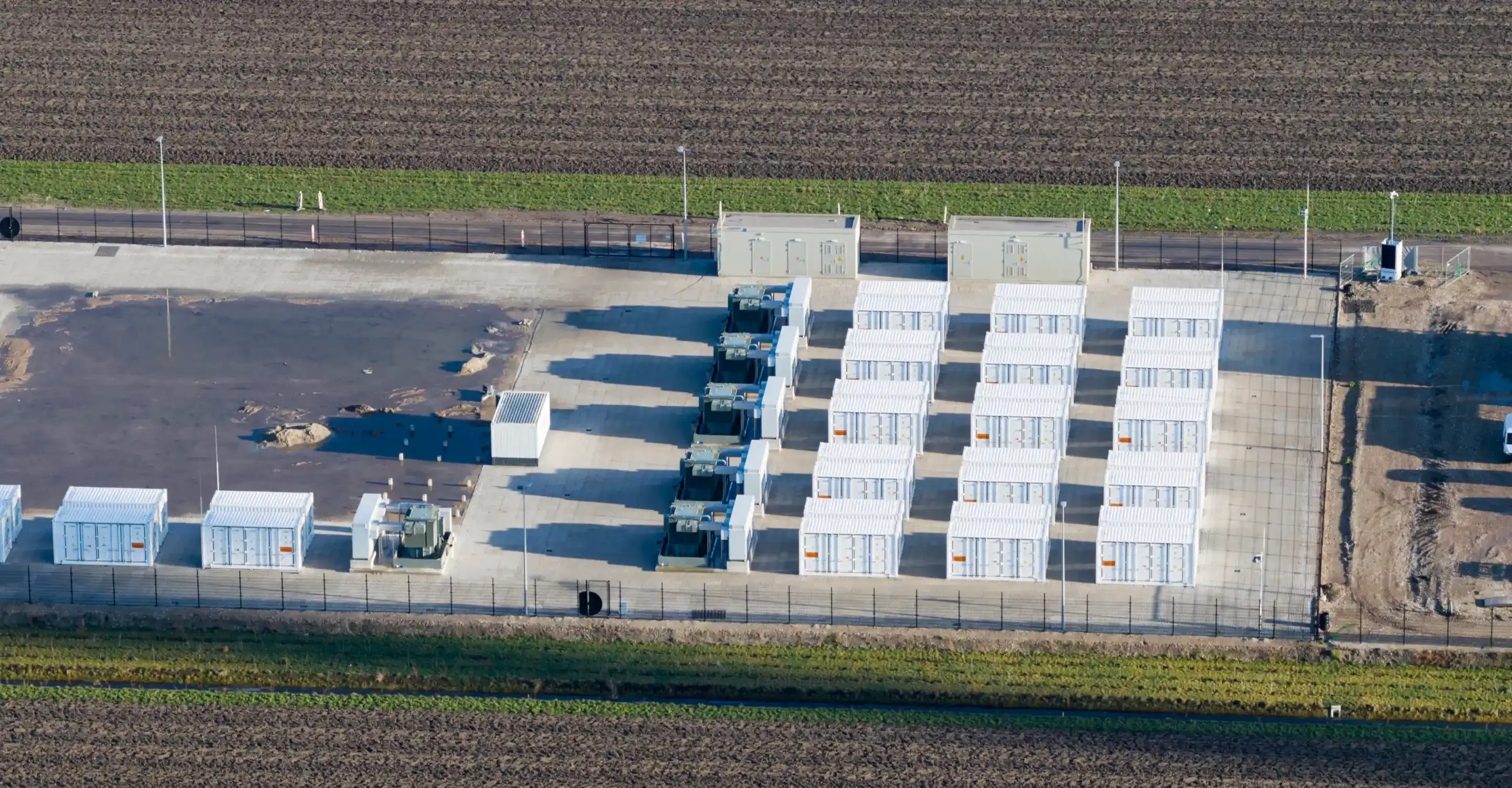
Yes. Energy storage technology is eligible under Section 48E on its own, without being paired with a generating facility, and it was not subject to the solar and wind acceleration. Construction must generally begin before 2034 for the full credit.
The statute also clarifies that storage installed at a solar or wind facility retains the longer storage runway even though the generating facility does not. A Tribe with a solar project that missed the July 4 deadline may still have a viable storage credit.
Eligible storage includes electrochemical batteries with a nameplate capacity of at least five kilowatts, thermal energy storage property, and hydrogen storage. For Tribal utilities and microgrid projects, storage is frequently the highest-value remaining credit, and it is the piece most directly tied to resilience objectives, keeping a clinic, water system, or emergency shelter energized during outages.
What about hydropower, marine and hydrokinetic, and nuclear?
All three are categorically zero-emitting and retain the standard phaseout schedule.
Hydropower is worth specific attention for Tribes with existing dams, irrigation infrastructure, or municipal water systems. Incremental hydropower additions at existing facilities and conduit hydropower in pressurized water pipelines are both eligible technologies with modest capital requirements relative to greenfield generation.
Marine and hydrokinetic generation is relevant to a smaller set of Tribes but remains fully eligible.
New nuclear, including small modular reactors, retains eligibility and picked up additional support elsewhere in the law, including new nuclear-related energy community designations. This is a long-horizon consideration for most Tribes but is not foreclosed.
What project costs can be included in the credit basis?
The investment credit attaches to the cost of the energy property itself, which typically includes equipment, foundations, mounting and racking, inverters and power conditioning, wiring, transformers, controls, and the labor to install them.
For facilities with maximum net output of 5 MW or less, the cost of qualified interconnection property, the utility-side upgrades required to connect the facility to the grid, may be included. On rural and reservation systems where interconnection costs can rival the cost of the generating equipment itself, this provision is frequently the difference between a viable and an unviable project. It applies to the 5 MW or less threshold measured at the facility level.
Costs that are generally not eligible include land, roads and site work not integral to the energy property, buildings that are not themselves energy property, and general facility improvements. Where a project bundles eligible and ineligible scope, a new community building with a geothermal system, for example, cost segregation should be planned at the design stage rather than reconstructed from invoices afterward.
Are there direct-pay credits outside the electricity credits?
Yes. Twelve credits are eligible for elective pay, and several remain relevant to Tribal infrastructure.
Section 45Q, carbon oxide sequestration, was left largely untouched and offers a long credit period for qualifying capture and storage projects.
Section 45U, the zero-emission nuclear power production credit, remains available for qualifying existing facilities, with new fuel-sourcing certification requirements.
Section 45Z, the clean fuel production credit, was extended and remains relevant to Tribes with biofuel, renewable diesel, or renewable natural gas operations.
Section 45X, advanced manufacturing production, remains available for domestic manufacturing of clean energy components and critical minerals, a consideration for Tribal enterprises pursuing manufacturing rather than generation.
Section 48C, the qualifying advanced energy project credit, still applies to entities holding existing allocations.
Each of these has its own eligibility rules, phaseout dates, and foreign entity restrictions. They are not interchangeable with the electricity credits and should be evaluated independently.
What happened to the EV charging credit under Section 30C?
Section 30C, the alternative fuel vehicle refueling property credit, was terminated for property placed in service after June 30, 2026. That date has passed.
This matters because EV charging infrastructure was one of the more accessible direct-pay opportunities for Tribal governments, and because charging projects funded through NEVI, CFI, and state corridor programs were frequently underwritten assuming a 30% credit on the charging equipment. Projects still in development should be re-underwritten without it.
Charging stations paired with solar canopies and storage present a more complicated picture: the charging equipment credit is gone, the solar credit depends on the July 4 construction date, and the storage credit remains available. These should be evaluated component by component rather than as a single project.
How large can the credit actually get once bonuses are stacked?
For a qualifying Section 48E project, the layers stack as follows. A 6% base credit. 30% when prevailing wage and registered apprenticeship requirements are satisfied, or automatically for facilities under 1 MW. Plus 10 percentage points for satisfying the domestic content threshold, which steps up over time and is more demanding than it was for earlier projects. Plus 10 percentage points for location in an eligible energy community. Plus 10 or 20 percentage points for an allocated low-income communities bonus.
A facility under 5 MW located on Indian land, meeting domestic content, and holding a low-income bonus allocation can reach 50%. The upper end of the range is achievable but requires each element to be documented independently, and the low-income bonus in particular is competitive rather than automatic.
Does the Indian land bonus still apply, and when is the deadline?
Yes, and there is a live deadline.
The Clean Electricity Low-Income Communities Bonus Credit Program under Section 48E(h) allocates capacity annually across four categories. Category 2 covers facilities located on Indian land and provides a 10-percentage-point increase. Category 3 and Category 4, qualified low-income residential building projects and qualified low-income economic benefit projects, provide 20 percentage points. Eligible facilities must have maximum net output under 5 MW.
Two constraints matter. The bonus is allocated, not claimed. The Tribe must apply and receive an allocation before the increase can be taken. Capacity is limited and demand has consistently exceeded supply, with the program receiving well over 50,000 applications in prior years. Applications submitted during the initial window are treated as simultaneously filed; later applications are reviewed on a rolling basis only after the initial batch.
Eligible facilities must be categorically non-combustion and non-gasification. This means biomass and biogas projects cannot access the low-income bonus, regardless of how strong the community benefit case is. Geothermal, hydropower, and other non-combustion technologies can.
The 2026 program year application window opened February 2, 2026, and closes August 7, 2026. Tribes with eligible sub-5 MW projects should confirm current program status and deadlines directly with the IRS or DOE before relying on any published date, as program mechanics have been adjusted between years.
Do the prohibited foreign entity rules apply to all of these technologies?
No, and the distinctions are meaningful.
The prohibited foreign entity and material assistance rules apply to Sections 45Y and 48E for facilities beginning construction after December 31, 2025. They disallow the credit where the claimant is a prohibited foreign entity, or where the facility received material assistance from one above a statutory cost threshold. The rules target entities connected to China, Russia, Iran, and North Korea through ownership, control, debt, or licensing arrangements.
These rules do not apply to Section 48 geothermal heat pump property, to projects that began construction before 2026, or to the legacy Sections 45 and 48 credits.
Where they do apply, procurement records must identify manufacturers, component country of origin, contractual and intellectual property arrangements, and the share of total direct costs attributable to restricted suppliers. Selecting equipment on price and performance alone can now create tax credit exposure. This is a specification-stage decision, not a purchasing-stage one, and it belongs in the RFP language and the supply agreements.
If our solar project began construction before the deadline, how long do we have?
Under the Continuity Safe Harbor, a project that established beginning of construction in 2026 generally must be placed in service by December 31, 2030.
Missing that date is not automatic disqualification. Continuous construction can still be demonstrated on the facts, and certain disruptions outside the owner’s control, severe weather, natural disasters, permitting and interconnection delays, and delays in Tribal, federal, state, or local approvals, may be considered. But a facts-and-circumstances showing carries substantially more documentation burden and more risk than the safe harbor.
Organizations that established construction start before July 5, 2026 should assemble that file now, while the people who performed the work are still available. The record should establish what work occurred, when, who performed it, the specific equipment or facility it related to, and whether it was performed under a binding written contract. Contracts, purchase orders, invoices, payment records, manufacturing reports, photographs, daily logs, equipment specifications, and shipping records all belong in it.
If our solar project missed the deadline, is there anything left?
Possibly. Three questions in order.
Can it be placed in service by December 31, 2027? That analysis has to account for permitting, environmental review, interconnection queue position, equipment lead times, procurement restrictions, financing, construction, commissioning, and the time to close out deficiencies. Interconnection is usually the binding constraint, and it is the one least within the Tribe’s control.
Can storage be separated out? Storage retains its own eligibility. A project originally scoped as solar-plus-storage may still support a meaningful credit on the storage portion.
Is there a better technology for this load? A Tribe that was pursuing solar for a building-heating load may find that a geothermal heat pump system serves the same objective with a credit runway through 2034 and no foreign entity restrictions. This is not a workaround; it is a genuine reassessment of which technology fits the load.
Can direct pay be combined with federal grant funding?
Generally yes, and this is one of the most useful features of elective pay for Tribal projects that layer DOE, BIA, EPA, or USDA funding.
Grant funds and forgivable loans do not automatically disqualify a project or reduce the credit dollar-for-dollar. There is, however, a limitation designed to prevent total federal support from exceeding the cost of the project. Where restricted federal funds must be used for the specific credit-eligible property, the credit may be reduced to the extent the combined total would exceed project cost.
Separately, projects financed with tax-exempt bonds are subject to a reduction in the credit amount.
The practical implication is that the capital stack should be modeled with the credit included from the outset, and the grant application budget should be built with the interaction in mind, not reconciled after award. This is squarely a coordination problem between the grant writer, the financial model, and the tax advisor.
What has to happen administratively before we can claim it?
Pre-filing registration through the IRS Energy Credits Online portal is mandatory. A registration number is required for each applicable credit property and must be included with the entity’s federal tax filing.
Registration is not a determination of eligibility. It is an administrative step that follows the substantive analysis, and it does not protect a project whose underlying qualification is weak.
Applicable entities must also file a federal return, Form 990-T for most Tribal entities, even where no return would otherwise be required, and the return must be filed by the due date. Elective pay elections are made on the return and are generally irrevocable. Missing the filing deadline forfeits the payment.
The opportunity narrowed. It did not close.
The July 4 deadline was real, and for solar and wind it was consequential. But treating it as the end of federal clean energy incentives would be a serious planning error.
Geothermal, biomass, hydropower, storage, and heat pump projects retain runways measured in years, not months. Direct pay, the bonus adders, and the Indian land allocation all survived. The credits that were terminated, EV charging under Section 30C and commercial clean vehicles under Section 45W, should be removed from pro formas immediately, but the generation and infrastructure credits that matter most to Tribal facilities are still in place.
What has changed is that eligibility is now technology-specific, date-specific, and supply-chain-specific. A Tribe that sequences its capital plan around those constraints, selecting technologies with remaining runway, starting construction documentation early, specifying compliant equipment at the RFP stage, and applying for allocated bonuses before the window closes, will capture materially more federal value than one that treats tax credit compliance as a filing exercise after construction.
The projects that will do best are the ones where the engineer, the grant writer, the procurement lead, the accountant, and tax counsel are working from the same schedule.
This article provides general information and should not be treated as legal, accounting, or tax advice. Credit eligibility depends on project-specific facts, construction-start timing, ownership structure, and documentation. Project owners should confirm eligibility with qualified tax and legal professionals before relying on any credit in a project pro forma.
Authors

Shae Mitchell
Co-Founder & Director of Operations, Sun Bear Industries